The Tennessee House Finance, Ways and Means Subcommittee will hear a bill on Wednesday that helps the state respond to disasters quickly and efficiently.
House Bill (HB) 2543, which was introduced by House Majority Leader William Lamberth (R-Portland), would have the Tennessee Emergency Management Agency manage disaster funding decisions rather than the state Department of Finance & Administration.
State Representative Tim Hicks (R-Gray), who is one of HB 2543’s co-sponsors, said Tennessee needs to “be prepared when federal assistance is unavailable or insufficient.”
“This legislation ensures our state has the tools to step in quickly to help communities and families recover and rebuild,” he added.
HB 2543 allocates funds to two groups following an emergency or disaster: local governments or individuals.
The bill defines local governments as counties, cities, metropolitan governments, and school districts.
To qualify, an individual must live in a county where a disaster has been declared and provide proof of state residency and lawful presence.
Local governments can only receive funding if the governor and the local government have declared an emergency, HB 2543 says. Local governments can also obtain funding only if federal aid is unavailable and the damage exceeds a certain threshold.
Officials must submit a formal request, the bill proposal states.
HB 2543 notes local governments can use the money to help with debris removal, emergency safety measures, and infrastructure repair.
Local governments must complete projects funded by disaster relief within 18 months or face not having costs reimbursed after the deadline, the bill proposal states, adding that local governments must get property or flood insurance within 120 days of funding approval.
HB 2543 establishes a matching program that prevents the state government from failing to fully pay for disaster costs. The state and the local government will each pay a portion, depending on the local government’s economic status.
The percentage of a disaster costs a local government will need to pay for ranges from 12.5 percent to 50 percent.
The bill proposal allows the governor to waive these cost-sharing requirements.
Funding that local governments receive can’t be used to cover costs covered by insurance, HB 2543 states.
The Tennessee state government can also make loans to local governments, which must be repaid in full to the state, the bill proposal notes.
Individuals may be eligible for emergency funds if an emergency is declared and the damage is too small to qualify for federal government aid, HB 2543 states. However, people can only get state funds if their losses exceed a certain threshold and the county they live in requests aid.
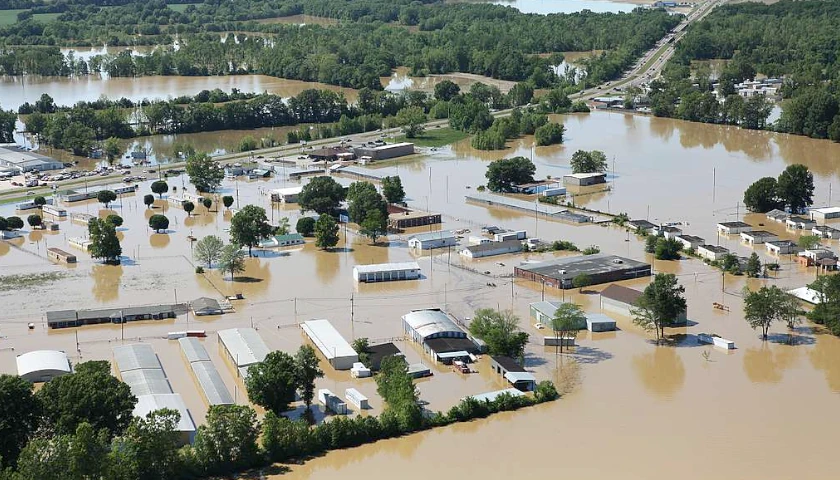
According to Hicks, following Hurricane Helene, the state “saw how hard it was for working families in Northeast Tennessee to get help.”
“This bill creates a clear path to make sure they aren’t left behind,” he added.
Since 2021, Tennessee has had 21 federal disaster declarations, according to usafacts.org.
If this bill becomes law, it will take effect on July 1st.
– – –
Zachery Schmidt is the digital editor of The Star News Network. Email tips to Zachery at [email protected].